
Reading at Home
The Reading Journey
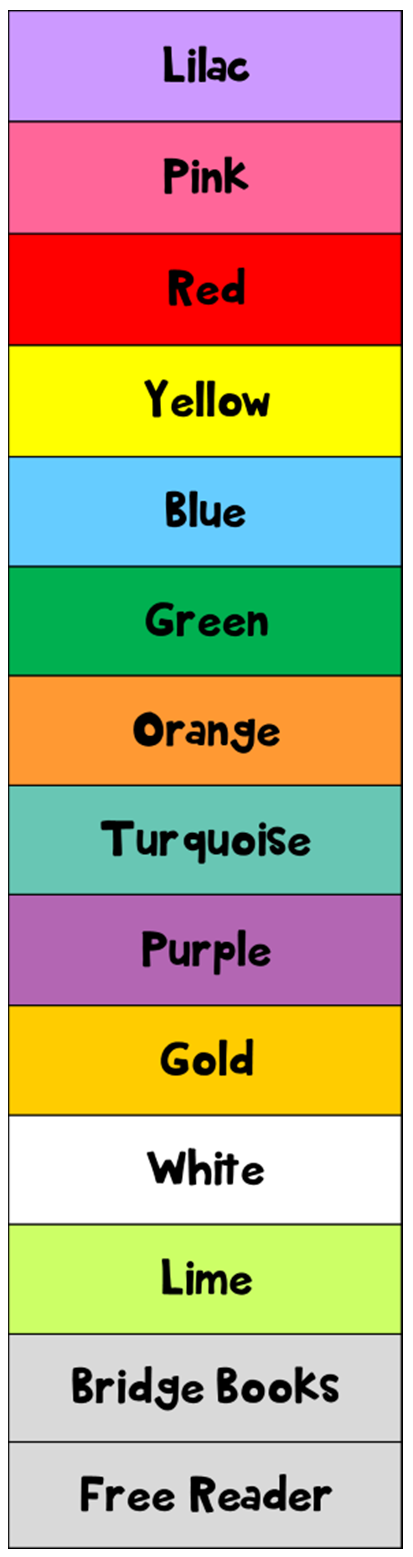
The books that are sent home for your child to practise their reading skills are grouped into different band colours. Each band has a focus on a particular set of sounds within the words and is matched to a particular phase of phonics.
Your child will progress through the colour bands as they master the skills (such as word reading accuracy, fluency and comprehension) required to move confidently on to the next colour increment. Opportunities for regular reading and skill practice are key elements in your child's journey in reading.
We aim for our children at Malin Bridge to become confident, enthusiastic and empowered readers who view reading as an enjoyable pastime and read for pleasure.
Reading Record Cards
Each child from FS2 to Year 6, who is reading books that belong to our colour-banded reading system, has a reading book and matching reading record card sent home on a daily basis. Our new reading record cards are a replacement for the reading record books that we used in previous years, but work in a similar way in terms of being a log of which books have been sent home.
Our reading record cards have a bookshelf image on the first page, space to record which books have been read in the centre and 'next steps for reading' outlined on the back. The cards sent home will match the book band each child is currently working on. To replace comment writing following each reading session at home, we ask for the new reading record card to be ticked and we'll do the same when an adult listens to your child read in school too. Reading really does support learning in so many areas, including language development, effective communication, confidence, self-esteem and creativity.
Please encourage your child to read regularly at home and to read each book twice before returning it to school to be changed as this will enable them to revisit new words as well as strengthen comprehension and fluency. When a book has been completed, one of the books on the bookshelf (at the front of the reading record card) can be coloured in and decorated.
We ask that all children bring their reading book and reading record card into school every day as it enables us to change books and listen to readers much more effectively.
If your child has progressed through all of the colour bands within our book band system, they will become a 'free reader' and will have the opportunity to choose their own reading books. Across key stage 2, many of our free readers are getting the opportunity to get involved with 'Bookopoly' where a selection of books and reading based challenges are outlined on a game board and successful completion of different coloured challenges leads to a wide range of prize incentives. The 'Bookopoly' game boards also include a range of recommended reading books and Little People, Big Dreams books that have been assigned to each year group.
1:1 Reading Sessions
As a guide, daily reading practice of around 10-15 minutes is most effective.
- Conversation – A nice way to set the tone for settling down and reading
- Focus on the front cover – Ask questions linked to the image, author, title, what can you see in the picture? Remember the time that we saw/went to...? What sounds or words are we going to need to focus on (inside the front cover)
- Child-led reading – Allow your child to hold the book themselves and read aloud to you; the book should be placed on a flat surface. Child to use a finger/lollipop stick to follow the words if needed. It's a great opportunity to boost comprehension too by asking some questions linked to reading. There are lots of strands of comprehension and in school, we use 'VIPERS'. These are a set of 7 characters who represent different areas of questioning and are great for building comprehension and reading for meaning.
VIPERS questions can be found on the back page of your child's reading record card once their focus in reading has moved from phonics and word accuracy and towards comprehension. Download a copy of the VIPERS questions.
- Talking time – Now that your child has read a few pages of their book, did they have a favourite page, a favourite character, something that made them laugh, did it remind them of another book or another story?
- Practice – On the back of your child's reading log card, we have listed the focus phonics sounds and tricky words that your child is working on at that point in time. Please spend a few minutes recapping and practising these, even if they have been highlighted in yellow.
- Tick – Please tick the house icon next to the book that you have shared at home. This enables us to build up a picture of your child's reading journey at both school and home.
From time to time, your child's enthusiasm to read regularly at home may waiver – perhaps as they move up a book band and start to find it a little trickier or perhaps they are ready to move onto the next stage. In this instance, here are some techniques to try at home to 'mix up' the routine:
- Read to a pet or a teddy
- Read over Zoom to a different family member or friend
- Read in the most unusual place you can find (and send a photo into school?)
- Read by torchlight
- Read in a 'reading den' you've built
- Draw a new front cover or new illustrations for the book you've read
- Take inspiration from your book and make it a multisensory experience. If the book is about popcorn, could you make it as a snack for afterwards? Does your book inspire an art and craft project? A walk? A trip? Does it make you want to find out more from a video clip?
How to help when reading at home:
- Encourage your child to break the word or words up into smaller chunks (segment)
- Use their phonics (what blocks of sound can you see?)
- Use the initial sound as a clue as to what the word might be
- Have you seen this word somewhere before?
- Does the word that you've just read make sense? Let's re-read it together
- Practice some of the words that your child found tricky using flashcards.
- Please avoid picture clues as a first step, as this can lead to an emphasis on guessing rather than an emphasis on word reading.